
Following a car accident, you’ll be desperately looking for reliable body repair to get your vehicle back up and running as soon as possible.
Often, we find that our clients are unsure or worried about what freedoms they have in terms of choosing a repairer, challenging their insurer, and much more. We’re also often asked: ‘why should I use an insurance approved repairer?’
To answer these questions, we’ve put together this article, giving you all the information you need before you make a decision on a body shop.
What are your legal rights regarding car accident repair?
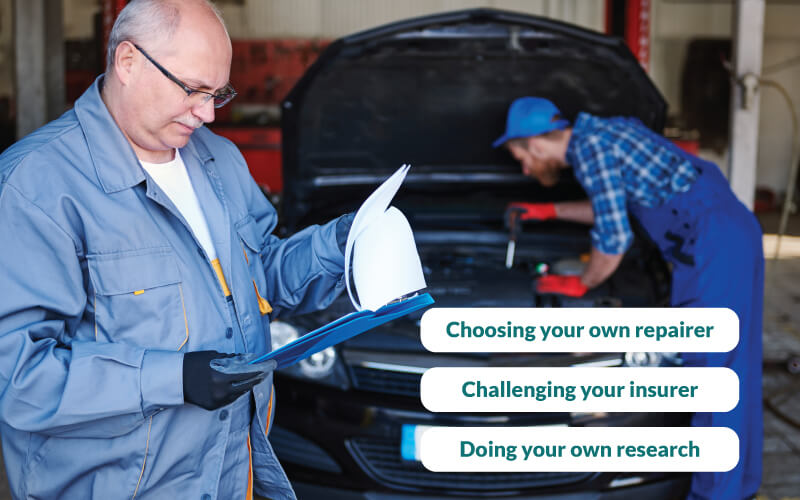
You have the legal right to choose your own repairer, regardless of the recommendations of your insurance company. You cannot be forced into choosing an approved repairer, especially if you don’t believe it to be the best option for you:
- Choosing your own repairer - You can choose repair shops regardless of insurer recommendations. This might be one you already trust and have a relationship with, or one which is approved by your vehicle manufacturer. Remember that it will often be in your best interests to go with an insurance approved repairer.
- Challenging your insurer - If you feel your insurer is attempting to push you towards cheaper and lower-quality repairs, you have the right to challenge this and obtain more information about potential repairs. However, as an insurance approved repairer, ST Accident Repair is dedicated to carrying out professional repairs at all times.
- Doing your own research - The ability to conduct your own research regarding local repairers, and determine which shop specialises in or is most suitable for your vehicle and repair type, allows for peace of mind that your car is in safe hands.
Despite being an insurance approved repairer, we at ST Accident Repairs would always suggest conducting thorough research on any repairer before choosing them. We’re more than happy to discuss how we can help you, just get in touch.
What happens if you don’t use an insurance approved repairer?

Whilst not using an insurance-approved repairer can be a good option in some cases, you also run the risk of increased excess, payment delays, and a whole host of other potential drawbacks:
- Additional costs - You may be charged a ‘non-approved excess.’ Essentially, your insurer will charge you up to roughly £250 extra on top of your usual excess.
- Repair guarantee - Your repairs may not be guaranteed down the line under your insurer’s policy. Meaning you may not be covered if damage is detected further down the line.
- Delayed payouts - Whilst insured repairers will manage the process from start to finish, your insurer may have to verify and challenge costs with a non-approved body shop. This could lead to delayed payouts or even delayed repairs.
- No courtesy car - You may lose other insurance perks such as courtesy cars if you don’t use an approved repairer.
Check out our guide to using an insurance approved body shop.
What to consider when finding the right body shop
When finding the right body shop, you need to consider the specific repair needs based on your vehicle and damage. Different garages specialise in different damage types, and vehicle brands, so research one which is best suited for your situation.
You also want to consider searching for a body shop which manages the insurance process for you. Acting as the sole intermediary between the garage and the insurer is highly time consuming and stressful, especially when opting for a non-approved garage.
At ST Accident Repair, our specialist team of experts manage the repairs process from start to finish, including communicating with your insurer and all involved parties to resolve the situation and deliver convenient but quality repairs.
Do you legally have to use an insurance approved repairer?
No, you do not legally have to use an insurance approved repairer to perform body work on your vehicle. It is always recommended that you take the time to research each local repairer, whether or not they’re insurance approved.
Whilst you don’t legally or contractually have to use an insurance approved repairer, there are definitely some positives associated with doing so.
For example, approved repairers have to meet certain standards in order to maintain this status. Insurers don’t want to work with repair shops who cut corners and don’t deliver quality, which gives you peace of mind that your approved repairer will work to a certain standard of excellence.